2026 Liming Updates:
A Big Year of Change
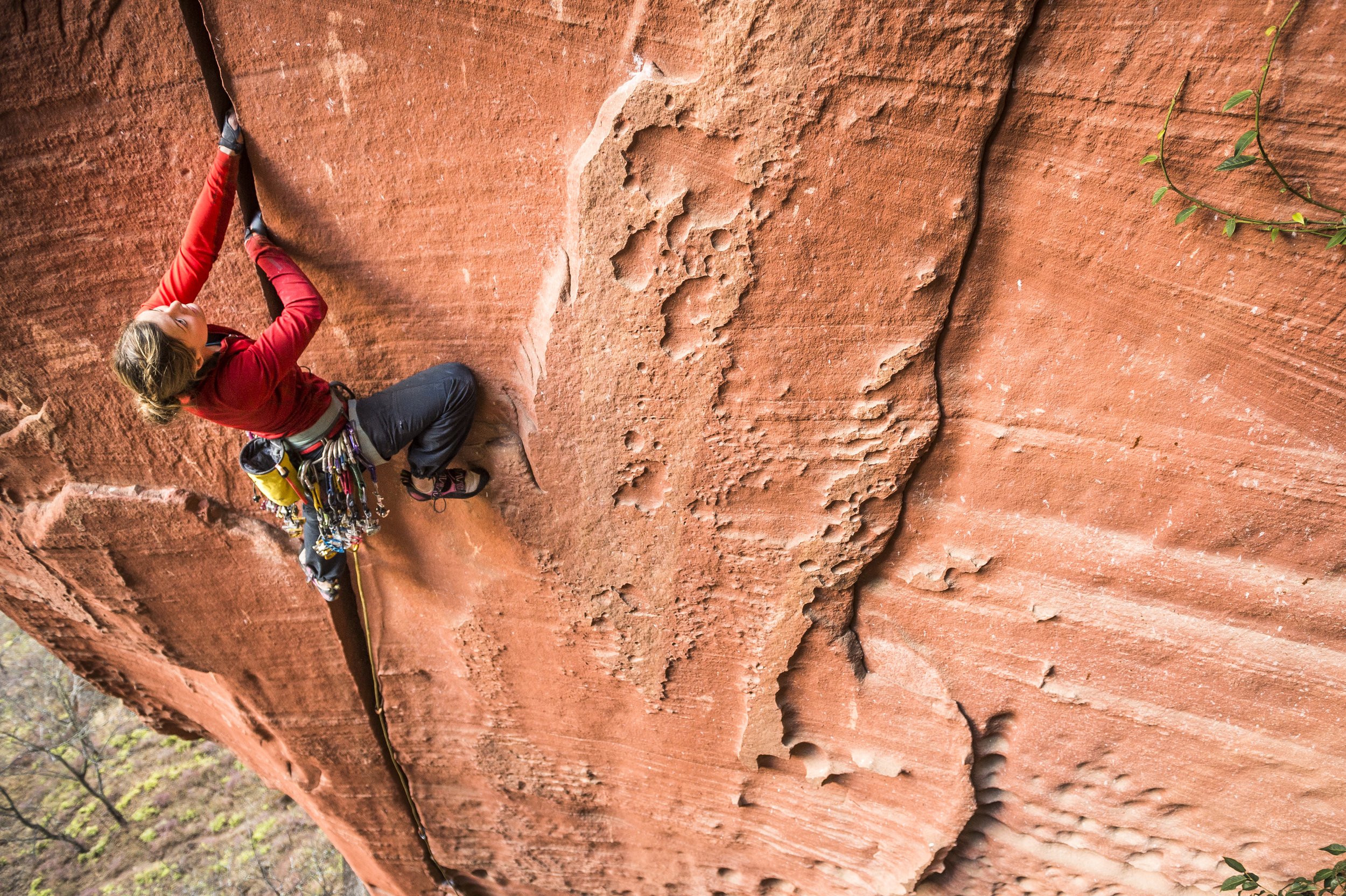
headline photo: P2 of the Firewall (5.11+) at Liming Cretaceous Area
photo by: Thomas Senf
The Situation as of February 2026
Right now, as some of you may have seen or heard, a bunch of anchor stations at some of the crags Liming have been chopped.
This was a culmination of an investigation by that developed throughout 2024-2025 and wrapped up at the beginning of this year. What the climbing community and Liming’s local village committee have learned is that the removal was part of a “rectification action” carried out by the Lijiang Mountain National Park Administration. This whole process began as a response to something called a “Procuratorial Recommendation Letter” that came down from the People’s Procuratorate (basically the state’s legal counsel) from Lijiang city. They were investigating what was being referred to as “geologic damage caused by rock climbing in Liming.” The circumstances surrounding that last quote is complicated, and that will get a bit more of an explanation in the sections below.
Right now, the authorities have not released specific details as to what areas’ anchor stations were removed. While the crew that carried out the technical portion of the bolt removal left in early February, it is still unclear if the bolt removal operation is fully complete.I will be visiting Liming later in February and the beginning of March, and I will get a better idea of the extent of the removal. Hopefully, that will lead to more clarity and another update for the climbing community. While there is a small contingent of climbers still in the valley, these developments warrant a general hazard warning: because the community does not know the full extent of the anchor removal, climbers run the risk of getting up a pitch and not having a descent anchor (other than a bail anchor they might have to leave, of course).
Locals in Liming village are still working with the climbing community in support of climbing in the area. There are official dialogues happening between Liming locals, members of the Yunnan Mountaineering Association (and the recently formed Rock Climbing Working Group), the Liming Climbing Community, and a few government departments at the Lijiang prefectural level and the Yunnan provincial level government. It is a long process of discussion, as a lot of decision-making needs to be consensus-based. For climbers, this can be frustrating, since it may feel slow and cumbersome. But these dialogues are now necessary because climbing has become popular enough to warrant land management decisions from people in charge.
This may be frustrating to hear, especially when China does not have many easily accessible, big-ticket destinations for trad climbing. But I remain hopeful that this situation will resolve in a way that allows climbing to continue existing in Liming. Will it look identical to how it did during Liming’s “Golden Age” back in 2017 to 2020? That I cannot say for sure. But the climbing community is advocating as hard as it can to keep climbing alive in the valley. We should know more in the coming months.
Why did some of the bolts in Liming get chopped?
Basically, the bolts were chopped as the result of a lawsuit.
In China, there exist environmental protection non-governmental organizations (NGOs) and environmental management agencies like the Guanliju (管理局). If they realize there are activities in their jurisdiction that they consider damaging to the environment, they can seek out the state procuratorate called the Jianchyuan (检察院) to sue the offenders and stop the “damage” the Guanliju claims is happening. The Jianchayuan is basically the state’s legal counsel. It has the authority to file lawsuits in the public interest and grant remedies that come out of those lawsuits. In Liming’s case, the “public interest” is the protection of the Danxia sandstone cliffs where we have been climbing for all this time.
This type of lawsuit, called a 公益诉讼/gōngyìsùsòng in Chinese, originated in 2024. The Guanliju submitted an action for a case to protect the public interest in the cliffs from development, and in 2025 the Jianchayuan responded to that request. The Jianchayuan gave the Guanliju a document that required the Guanliju to assess whether or not the land had been destroyed by the actions of climbers. Once they received that official document, the Guanliju removed the trail signs that directed climbers to the crags (thankfully, the Liming Climbing Community was able to collect and save the signs before their full destruction). By early 2026, the Jianchayuan granted to the Guanliju permission to remedy the alleged “geological damage” by removing bolts. The granting of that permission set in motion what many of you heard in the past month, and some routes in Liming had their bolts chopped. This bolt removal wrapped up in February right before Chinese New Year, and the bolt removal team and the Guanliju left the area. But as I said above, it is not yet clear if they intend to return.
Some readers might wonder why climbers could not directly oppose the bolt chopping action, and that is a fair question. I, too, am learning in real time about how the pathways of authority and power in local politics. As far as I understand, doing something like this simply does not exist as a pathway to address a perceived grievance when the action is carried out by an official body like the Jianchayuan. A more liklely way forward is through a lot of meetings and consensus-driven discussion between official government bodies and formally recognized groups (something I will talk a bit more about below). I empathize with readers who might think that such a process is too glacial to help. But this is one of the “laws of physics” in how these kinds of interactions work over here. Being defiantly oppositional does not produce results and can actually make this process harder. Deliberate discussion does help. Are good results guaranteed? No. Is this the best way we currently have to move forward? Yes.
A picture showing work crews decending fixed lines and rappels from above Sci-Fi Wall just south of Liming in the neighboring town of Liguang during the February bolt removal action.
The Basic History
Liming was designated a National Park about 16 years ago, a designation that was brought about because of the value bestowed on the Danxia Sandstone cliffs of the area. Becoming a national park in China comes with a list of requirements for land management. On top of that, the national park includes “protected natural area” and within that a “core protected natural area.” Each of those designations came with additional requirements for managing and protecting the land. And some of that management responsibility fell to a government department called the Guanliju (管理局/guānlǐjú). The Guanliju and the company that managed the park had to work together to balance protecting the land with using it to local benefit via the national park and scenic area.
The land itself, which is the traditional home to the Lisu people, was developed in hopes to draw tourists from the nearby city of Lijiang. Because Lijiang has become so popular with travelers for its views of Jade Dragon Mountain and its Old Town’s status as a UNESCO World Heritage site, the park in Liming was hoping to ride the wave of tourist enthusiasm that surround the Lijiang region and Yunnan, in general. The fact that Liming is only a stone’s throw away from Tiger Leaping Gorge, one of the biggest natural attractions in all of Yunnan as one of the deepest gorges on earth, led to a belief that Liming could follow in the footsteps of its successful neighboring scenic areas.
From the archives. A youthful Mike Dobie prepares to climb something new in the early days of Liming. photo: Daryl Kralovic
From the archives. Mike Dobie climbs the start of the Cretaceous Crack on Soul’s Awakening, Liming’s very first route, in 2010. photo: Daryl Kralovic
Over the years, infrastructure was built to accommodate what was hoped to be an influx of outside interest. Those of you who visited Liming in the early days may remember the glamping tent hotel being constructed underneath the Lisu area and the Painted Wall or the boardwalk that runs up to the top of Thousand Turtle Mountain that was a favorite rest day activity for climbers visiting the area. Some of you may recall the big gondola that rose up behind the Dinner Wall. Over the years, various amenities were constructed and modified in hopes of increasing interest in the area. While there were occasional bumps in tourist visitation, nothing ever seemed to rise to the level that the infrastructure was built to support.
The great contradiction knowing the post-2020 saga regarding the legality of Liming climbing is that it was once actually legal. In the early days of the park, from 2010 to 2014, climbing was actually allowed. Not coincidentally, that period is when Liming hosted a couple of climbing festivals that were big enough to attract professional climbers like Yuji Hirayama, Cedar Wright, and Matt Segal, among others. After 2014 there was a shift in official government policy. The consequence was that climbing no longer enjoyed any sort of official sanction, and it lived in a legal, semi-underground gray zone ever since.
Yuji Hirayama performs a gear demo for participants at the 2012 Liming Climbing Festival. image: Alex Zhao
Cedar Wright talks about trad climbing skills for climbers at the 2012 Liming Climbing Festival. image: Alex Zhao
In the background over a decade of development and promotion of the park, the climbing community was a constant presence. Though it started small, with barely a dozen climbers in the early days, it slowly morphed into a regular community of possibly hundreds that blended both Chinese and international climbers. The festivals really boosted Liming’s reputation as the trad climbing Mecca of China. It even was featured in publications ranging from the South China Morning Post to the Sixth Tone to Rock and Ice and Outside Magazine. Liming’s climbing culture was the subject of multiple short films.
It became a rare example of a grassroots movement in China that advocated for climbing. The key feature with climbers was their constant presence. Instead of being transient tourists, climbers visited the valley for long periods of time, and a small ecosystem of businesses grew up around that community, with multiple restaurants and guesthouses opening to service the community. That community peaked during 2017-2020, which–as I mentioned above–some of us refer to as Liming’s Golden Age. Routes were going up at an ever-increasing rate, local guesthouse and restaurant owners were doing brisk business, and it looked like Liming was poised to become a model for how climbing could be a net benefit for a rural town. Then, everything came to a screeching halt with the events of 2020, and that partially set the stage for the events we are seeing today.
High season during the golden age (this one from 2018). Local restaurants were booked out back before 2020. Some nights during high season, particularly in spring, climbers occupied every table available in local establishments like Auspicious Restaurant/吉祥饭店. Sadly after years of operation, the family that ran the restaurant, husband and wife team Aguang and Hongyan, moved away. That storefront now sits closed in 2026. photo: Ryder Stroud
In 2025, the real estate company that managed the national park in Liming faced a mounting series of management issues and because of that they ceased operations. In the wake of that stoppage, the explosion of climbing’s popularity meant that more and more climbers wanted to visit Liming all while climbing was coming under more and more scrutiny by land managers. Those managers wanted to understand and more clearly define climbing’s relationship with the land, especially land in a national park. What you are seeing with the most recent news is a result of these growing pains as the system defines what climbing is and how it is allowed to exist. Those growing pains coincided with some of the governing structure of the park freezing up when park management stopped the park’s operations.
From the archives. Eben Farnworth, another one of Liming’s early pioneers, climbs Dancing With Dragons. photo: Mike Dobie
Matt Segal runs a crack climbing demo for participants of the 2012 Liming Climbing Festival. image: Alex Zhao.
A pioneer in the making. A youthful He Chuan climbs during the 2012 Liming Climbing Festival. He Chuan is now one of China’s leading climbers and alpinists with bold first ascents and accomplishments under his belt, including being the first Chinese climber to summit Cerro Torre in Patagonia. image: Alex Zhao
The Context
(1) How land is managed in China
All land is managed by the government in China. Each managed parcel of land has someone who is responsible for it. What we, the visiting climbers, see as a natural space where there are few or no people is likely designated as someone’s responsibility through a government department. How that land is managed is a reflection on the reputation, capabilities, and potential advancement of the people in charge. Manage it well, and they are rewarded and possibly promoted. If that land gets damaged through any sort of activity, be it something extreme like mining or something less impactful like an influx of climbers, those land managers run the risk of looking like they are not managing their land effectively. It may feel like common sense that climbing is not the same as mining or logging when it comes to how it affects the land. But to land managers here, ALL of those activities are impacting the land. If they allow those impacts to happen unregulated, the downstream consequence is that they can get reprimanded, have their pay docked, or, even worse, lose their job.
Layered on top of this land management challenge is how risk is viewed when it takes place on someone’s land. Climbing is viewed as a “high risk activity” in the country as a whole. Risk and risk tolerance are incredibly culture and context-dependent. In North America and Western Europe, activities like climbing have been accepted as part of the
That crazy time I was on TV. By complete random chance, I got invited to be on season 2 of Exploring the Unknown in China. The whole show centers around Chinese movie and pop star Wang Yibo exploring outdoor sports, especially climbing. Because of Yibo’s major celebrity status in China, a lot of people have taken up interest in climbing. The show got an extra boost through the inclusion of Jimmy Chin, who was Yibo’s mentor for the show. photo: Tencent and Warner Brothers-Discovery (Asia)
Increasing popularity. One of the events the Liming Climbing Community ran at Banana Bouldering gym in Shenzhen, Guangdong province back in 2024. Even a couple of years ago, gym climbing was expanding rapidly across the city. photo: Banana Climbing Gym
Liming’s early climbing adopters. The Faraway Inn/千里之外 was the first locally owned hotel to open and cater to climbers. Opened well over a decade ago, its name has been synonymous with Liming climbing since it was the base for the original generation of Liming route developers. Multiple hotels have opened in the intervening years, with now about a half dozen of locally owned hostels on Red Stone Street (红石街), the main road in Liming. But many of them have not yet been filled with additional guests. The legalization of climbing will hopefully fill those vacancies. photo: Pavel Toropov
Signs of removal. The red boxes indicate where some of the anchor stations were removed. This photo, taken by a visiting climber, shows the anchor for The Warmup and belay anchor for Japanese Cowboy and Flying Squirrel were removed.
Fixed lines hang from the Cave area during the bolt removal action undertaken in February 2026.
One of the great achievements of Liming’s Golden Age. Logan Barber established Honeycomb Dome (5.13d) in 2017. He is also the first to free Liming’s only other 5.13d, The Firewall. Both routes became test pieces for Chinese and international climbers alike. photo: Garrett Bradley Photography
Golden hour over mountainous country. The Dinner Wall and Laojunshan (4427m/14609 ft.) glow in the evening light. Though the landscapes around Liming may appear rugged and untamed, it is all managed by the government. There is someone or some agency (负责人/fùzérén) who is responsible for managing improbable places like these. photo: Ronny Lehar
culture and that injuries climbers might sustain are usually attributed to the fault of the individual. There is a whole story here about the history of public land and climbing in the US. It shares many of the features of China’s current challenges when they happened in the 60s, 70s, and 80s. But that is a story for another time. In China, the optics are quite the opposite from modern Western views on climbing and risk. Climbers entering the area and causing an impact to the land or getting hurt in an accident is not immediately attributed to personal responsibility. Even if an individual’s behavior lead to an accident, the cultural view is that someone with more authority might be responsible for allowing the CONDITIONS under which that individual got hurt.
It is a unique combination of authority and responsibility. The people in charge of the land have a very well-founded fear that if someone like a climber (or even a hiker or run-of-the-mill tourist) gets hurt on land they manage, those people in charge run a very real risk of receiving some sort of blame from their boss and potentially facing career-altering consequences. What magnifies this problem is a situation in which no clear chain of responsibility is spelled out somewhere on paper. Until that chain of responsibility is clearly specified, climbing is a risk to land managers because of the real possibility that they take on too much personal risk exposure without that structure. Essentially, something like an individual injury on a managed piece of land carries with it the optics that the person in charge is not fulfilling their responsibilities of “managing the land well.” Those optics carry with them the very real consequences that I mentioned above. Hence, part of the current situation requires establishing a clear chain of responsibility, how the climbing community can manage risk, and who EXACTLY is the responsible person should someone get hurt.
(2) The explosion in the popularity of outdoor climbing
Rock climbing in China has gone mainstream. Ever since 2020, interest in outdoor climbing has exploded. For example, when I lived in Chengdu in 2014, there were only a couple of climbing gyms worth visiting, and even then they were quite limited in what they offered. These days, there is well north of a dozen. That shift is even more dramatic in places like Shanghai and Shenzhen, where newer facilities rival or even surpass the sophistication of competitors in the US and Europe. This change means more and more local climbers are trying the sport and becoming aware of new styles of climbing (like trad and crack climbing). That awareness leads them to places that were, in the past, much less popular. Before this explosion, places like Liming and the climbers who visited the area used to have more flexibility because the community was almost too small to matter much. It existed on the fringes and out of largely out-of-view because it wasn’t a big enough phenomenon for officialdom to see it and devote resources to managing it.
Now, with the proliferation of climbing videos on platforms like Xiaohongshu/RedNote and celebrity interest in climbing through TV, film, and music stars like Wang Yibo, lots of sports enthusiasts in China are going to new places to try different styles of climbing, even if they do not have the requisite training to do it safely. Land managers are now facing a super-sized “gym-to-crag” challenge that many of us in the US have heard about back home: people who are used to very tightly managed environments like a gym are not fully aware of the variables and hazards that start to pop up when they climb outside. The explosive growth of climbing gyms in big cities in China has produced a huge number of athletically talented climbers, but those talented climbers have not necessarily adapted the skills to transition safely from the gym to the crag, even more so to a trad climbing crag. China does not yet have very many accessible venues to practice crucial skills for a sport like trad climbing. So there ends up being a mismatch between how many climbers who want to try trad climbing and how many places there are to support it. Funneling a lot of climbers to a couple of places or even a single place like Liming is a very quick way for land managers to notice and take action.
The next Liming generation is here and ready to carry the torch! I taught a lot of eager, young climbers back in the spring of 2024 during a multi-day skills clinic done in collaboration between the Liming Climbing Community and Patagonia (China). The excitement and energy they have is real, and I am psyched to help encourage them to develop it even more!
More scenes from television. Yibo and I high-five at the top of the North Face of Castleton Tower, one of the iconic tower routes in the deserts of Utah. It was Yibo’s first climb up a desert tower and was a greater part of his discovery of his passion for multipitch adventure climbing. His story has resonated with a Chinese audience that is increasingly looking to explore outdoor sports. photo: Tencent and Warner Brothers-Discovery (Asia)
One of the many climbing clinics that the Liming Climbing Community has run across China. This one came during the winter of 2024 in Chengdu. Despite the cold temperatures, more people than were in this final photo participated in the program.
From a land manager’s standpoint, they have no way to vet whether or not all of these individuals showing up on their land to go climbing are qualified to do so. How can they distinguish between the seasoned professionals or enthusiasts from the newcomers? For international climbers visiting China, this can be frustrating. Those of us who have spent years or even decades honing our craft find that this experience is sometimes just met with a flat “no, you cannot climb here,” even if we try to show the wealth of training we might have as individuals. But if we look at things with a slightly more macro perspective, this refusal has a degree of logic. Because land managers have no idea of the skill sets of visiting individual climbers, they have no incentive to say “yes” to climbing. They have no mechanism to confirm that you are who you say you are and you have the experience you claim to have. If someone were to misrepresent their climbing experience or credentials and proceed to get hurt on that manager’s land, that would look bad for them on multiple levels via the risks I explained earlier.
To fill that gap and have someone vouch for individual’s skills or responsibilities, climbing associations and clubs step in. They are entities that have standards and manage individuals as well as their risk exposures based on their individual experience. Seasoned climber might get the support of an association to climb in an area if they show up with a recognized international credential. Newcomers or recreational enthusiasts might have to join the group’s more tightly managed programs to teach them baseline skills when they visit that climbing area.
This is roughly the system that exists in places like Shuangqiaogou in Sichuan–China’s premiere ice climbing destination. The park requires that visiting climbers come as part of a group or at least with some sort of official endorsement from an officially recognized organization like a mountaineering association. Climbers existing within that infrastructure is a signal to land managers that climbers in the group have someone within the recognized system vouching for them. Being part of a group is, more importantly, a signal of a clearly defined chain of responsibility for managing climbers’ risk exposure or dealing with the fallout from an injury. When an official association goes to an area managed by an entity like a national park administration or government department, the risk management becomes more clearly defined, and that is something that land managers like to know. If someone in the club or association gets injured, there is a clearer chain of responsibility that goes back to the club and NOT the land manager. The land manager can then resolve some of the fears they have regarding their own personal exposure to risk and how it might directly affect them.
A glimpse back into the past. I climbed in Shuangqiaogou during the winter of 2014. Back then, there were structures to govern how climbing was managed in the park, including signing a waiver, providing proof of insurance, and paying a daily climbing fee. But climbers could still be independent, as we were all those years ago. That structure got more refinement in recent years as Shuangqiaogou became more accessible with the completion of the Kangding Highway. An influx of climbers via Chengdu, the major metro are barely a couple hundred kilometers east, meant that the park had to deal with more people wanting to ice climb, leading to the more tightly managed, association/company-based system we have today. photo: Nico Caceres
Looking down some of the roadside ice in Shuangqiaogou. Part of what makes the area so appealing is some of the huge roadside ice falls that climbers can access, sometimes right next to the climbers inns. Couple this with soaring granite peaks rising at the back of the valley, and you get a powerful draw for climbers wanting to try ice climbing. photo Ryder Stroud
Woody Jacobson climbs pitch 5 of Liming’s classic multipitch Back to the Primitive back in 2016. The glamping tent village is clearly visible below him in the photo. Originally built around 2014, the tent village slowly expanded and changed amenities from 2015-2020 in attempts to attract more visitors. Many visiting climbers often remarked how extensive the camp was and how empty it always seemed to be. photo: Ryder Stroud
Over the past decade, the tourists that the park hoped would show up in Liming never materialized. The huge infrastructure projects like the gondola, tent hotel, and the via ferrata sat derelict. They simply never got the volume of visitors the park believed would come. This is partially because Liming is so remote compared to other tourist attractions in the Lijiang area. Big buses of tourists were less likely to make the 2.5-hour drive through winding mountain roads to get to Liming. The one constant during the years of infrastructure building in Liming was the presence of climbers. Climbers have been a much more stable source of income in the valley, since they stay in town and patronize local businesses for weeks or even months at a time–far longer than almost all visiting tourists who follow the classic tourism model. Of course, accepting climbers is a much higher-risk proposition than simply welcoming bus loads of sightseers. If sightseers were the primary driver of business in Liming and climbing was an afterthought, climbing’s existence in the valley would be much harder to justify, since it has a very different risk-to-benefit ratio than sightseeing does.
But if the sightseers are not visiting and climbers are, climbers have an opportunity to prove to the locals that climbing is worth supporting because it has a 16-year track record of bringing people into town for locals’ benefit. The transaction between the climbing community and the local population is more consistent, stable, and mutually beneficial. We patronize the local economy and as long as we do, locals support efforts to keep climbing around. To that end, locals have been advocating for climbing access in the park, and they have been working with the Liming Climbing Community over the past 3 years to find a legal mechanism to secure climbing’s future. In this case, success for the climbing community means that the locals have to run the gauntlet of working with government departments to fully flesh out how climbing can be allowed to legally take place and where it is permitted to take place in the area. That involves a lot of deliberate, consensus-driven processes, MANY meetings, and potentially interacting with government departments who may have differing interests.
What you are seeing in the past couple of years is Liming climbing’s growing pains as it interacts with officialdom to figure out how climbing fits into the greater scope of land management in a national park.
(3) Climbing and Local Support
Because the main scenic area never attracted the visitors that the national park originally hoped, climbers organically moved in to fill the void. Part of the creation of the national park was an understanding with the locals that if and when more tourists visited the park, the local economy would benefit. Tourism in many places, China included, is transactional. National parks create a reason for visitors to travel great distances to visit. The park becomes a sellable product. Visitors come into more rural areas, purchase access to that product, and patronize local businesses. Locals then benefit from the creation of a scenic area or national park. The classic model of national parks in China is something far-removed from climbing. Visitors come from big cities to these places; they ride around in golf carts to carefully selected scenic stops around a park; they take pictures; they eat a meal or two at local establishments; they buy some souvenirs; they go home. This is a very low-risk model that climbing does not fit neatly into, if at all
The via ferrata. One of Liming’s main tourist attractions was a fairly extensive via ferrata network built on what climbers called “The Painted Wall,” which sits directly across the canyon from The Pillars, one of Liming’s most popular crags. It was meant to be the “climbing activity” for the park. It was such a key amenity for the original park plan that the park hired the French company Prisme, an internationally recognized company specializing in via ferrata construction, to build it. For the number of years I lived it Liming, it sat mostly quiet and unused, rarely seeing the group tours they had originally planned for.
Yu Hualong, known to the climbing community as “Lao Yu” and his wife Mrs. He, have been constant presences on the main road of Liming. Aside from running the guesthouse business, Lao Yu is also a talented wood carver and sculptor, with his pieces of his art scattered across the property. His unique touches he has built into the guesthouse has given it a homey atmosphere that climbers enjoy. photo: Chen Feier
Is this without precedent?
It may be quick for a lot of us to decide that this is distinctly a China-specific phenomenon. But climbing has experienced growing pains in a lot of other cultural contexts. Many of us came of-age in a climbing world where a lot of that bureaucratic wrangling already happened. But access problems have happened everywhere in the world, even in more recent times. Australia experienced a massive access loss in the Grampians and Arapiles. The US experienced access issues for years in places like the Red River Gorge. Sure, some of the specifics of climbing in China is different. That is to be expected, since each country will experience a different relationship with climbing and its growth based on things like each place’s cultural value system. However, the foundation of climbing is largely shared when viewed at its base level: how is land managed and how does climbing fit into that management? What we are seeing in the case of Liming is the China-specific manifestation of the climbing community, local interests, and officialdom all trying to decide where climbing fits into the hierarchy of land management and, more specifically, how does climbing fit into the land management of an officially dedicated national park.
In China, this story of climbing access has echoes of the growing pains of other areas within the country, too. Places like Baihe, the granite canyon to the northwest of Beijing, went through something similar with climbing. What was once a loosely understood and regulated sport was heavily restricted for years as official government departments sorted out how to manage the land, since it is in proximity to one of the big reservoirs that serves Beijing. The good news is that the Baihe situation resolved with climbing continued to be allowed. There were some guardrails and limitations that were established that defined where climbing was allowed to happen, but in the end, climbers still go to Baihe, and it is still one of the better, easily accessible climbing areas in China.
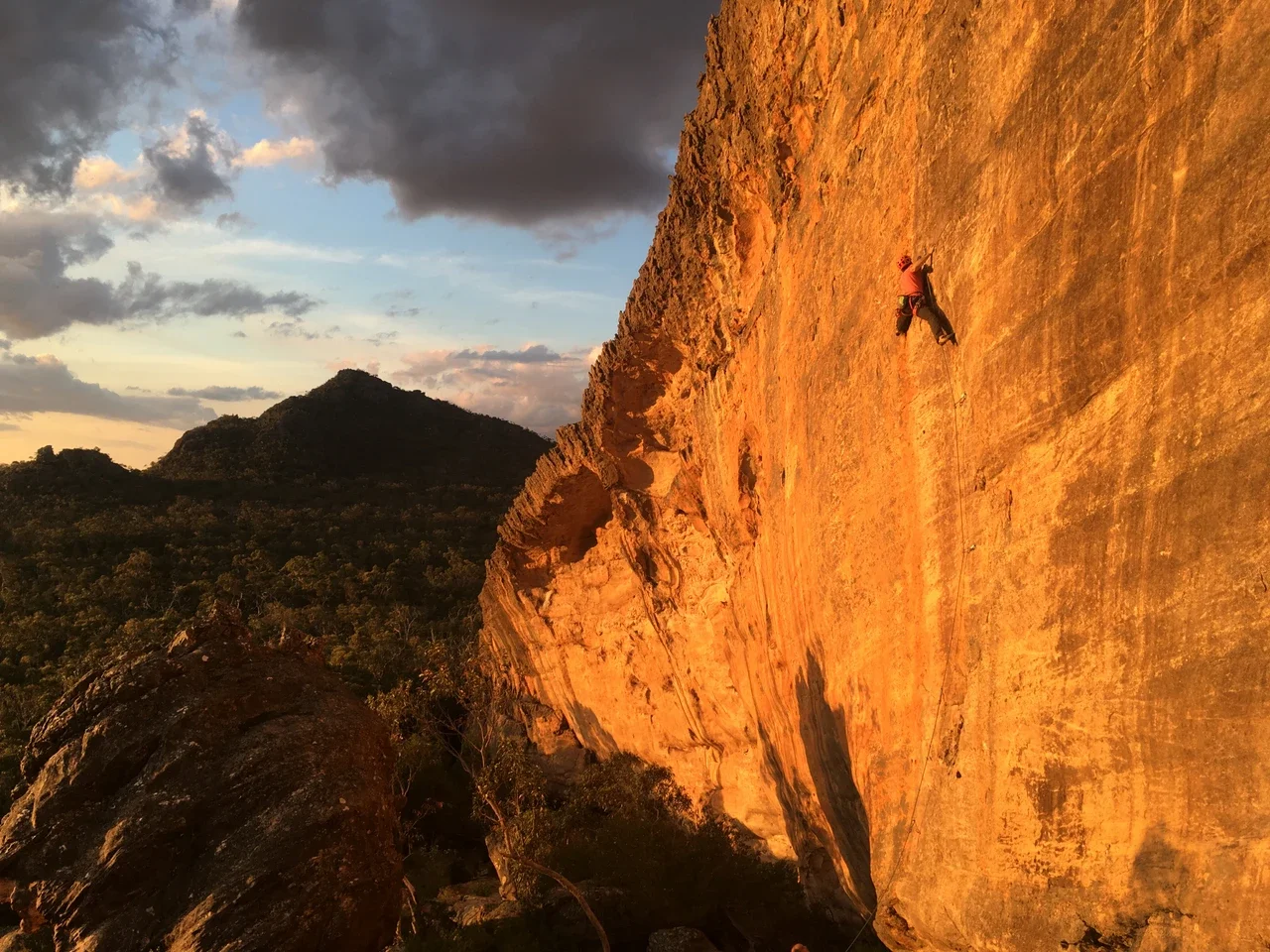
Australia experienced a bitter setback for climbing access when huge swaths of the world-famous Grampians and Arapiles climbing areas were closed to climbing by Parks Victoria. Climbers there have been tirelessly pushing back against the closure. Find out more about this whole saga from Save Grampians Climbing website. photo: Victor Pillac via The Crag
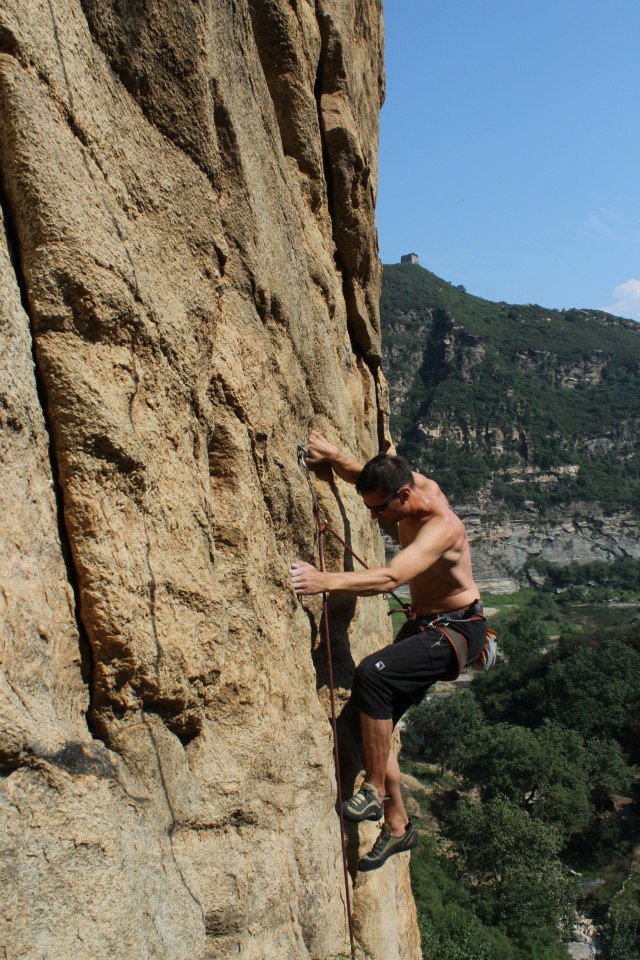
Scenes from Baihe. Climbing has been around near Beijing since the late 2000s. The area exploded in popularity in the 2010s, leading to more scrutiny and a years-long closure to many areas as the government hashed out how climbing could exist near one of Beijing’s main water sources. photo: Ryder Stroud
The big questions: What does this mean for you? What happens next?
In short, China has reached a real inflection point in the growth of climbing. It is no longer an organic phenomenon that is too small to go unnoticed and unregulated. The inconvenient truth of climbing in China is that it is the victim of its own success. With more recognition means that more people want to do it. And when enough people want to do it, land managers have to come up with a very concrete management plan to deal with that increase in popularity.
What I want to emphasize is that all of these developments are not just blanket negative news. There is a positive way forward. The Guanliju is in talks with the Yunnan Mountaineering Association, Lijiang Sports Department, the Liming locals, and the Liming Climbing Community. They are assessing the legality of climbing, what routes are legal, and what responsibility climbers must take on in order to preserve access. There is a general consensus that all parties WANT to find a legal mechanism for climbing’s continued existence in Liming. What the mechanism is and how it gets put into place are the big challenges we are seeing play out in real time.
If you plan to climb in Liming in the next couple of months, I would advise against it. While technically for now, it falls under “climb at your own risk” if you go climbing there as of late-February 2025, flying across the world to go climbing in a place with uncertain access is not an ideal proposition. I completely understand the disappointment people might feel traveling all the way across the world to constantly look over their shoulder and worry that they will be told that they cannot climb and that they may have to leave the area. If you have immediate plans to climb in Liming in the next couple of months, I would consider changing your plans on destinations until access in Liming stabilizes.
But the good news is that the community is still here. We are still advocating day-in and day-out for climbing’s future in Liming.
A community event in town. Climbers collaborated with locals in the winter of 2023 to have a barbecue and climbing film screening event in Liming village. These events were a great start in building relationships with the local townspeople. We hope to do more relationship building in the coming months and years. photo: Ryder Stroud
I have personally experienced this disappointment in my 12+ years of climbing in China, and it does not feel great, especially since I devoted years of my life to the climbing community and route development in Liming and Yunnan. But letting the next steps play out is key to what I hope will be the preservation of climbing in Liming. Each generation of climbers in Liming have to stand on the shoulders of the previous onein order to achieve new and better things, and that is what the Liming Climbing Community has to do to secure a future for that next generation.
Some of you might wonder what you might be able to do. At the moment, there is not a lot of direct interventions for the regular climber to do. Official discussions are still underway, and those cannot be influenced by outside pressure. But what you can do it recount the positive memories and influences that Liming had on you in the past years. Showing the benefits and positive influences that climbing brought to the Liming climbing community and the locals can be an affirmative, positive reinforcement that may help climbing’s case in the near future when officialdom needs to see evidence of those benefits. When it becomes possible for the greater climbing community to help out, you all will be the first to know!
Stay motivated. Stay positive. Keep up the support. With any luck, we can see this through together.
See you all soon.
Ryder
Scenes from a Growing Community
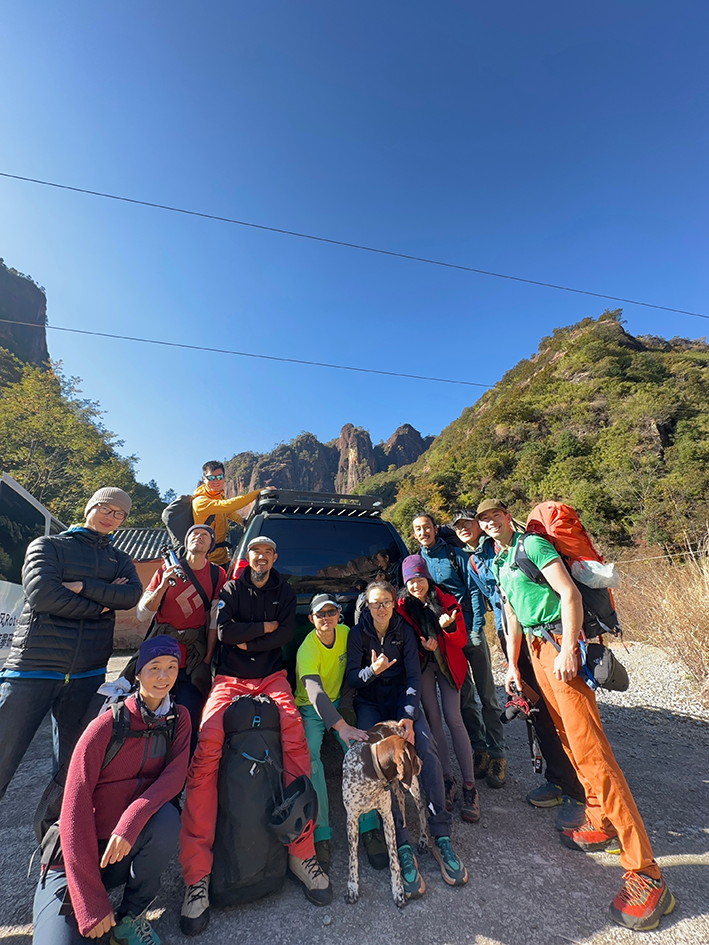
Here for the long haul. The community is still here, and we are still working hard!
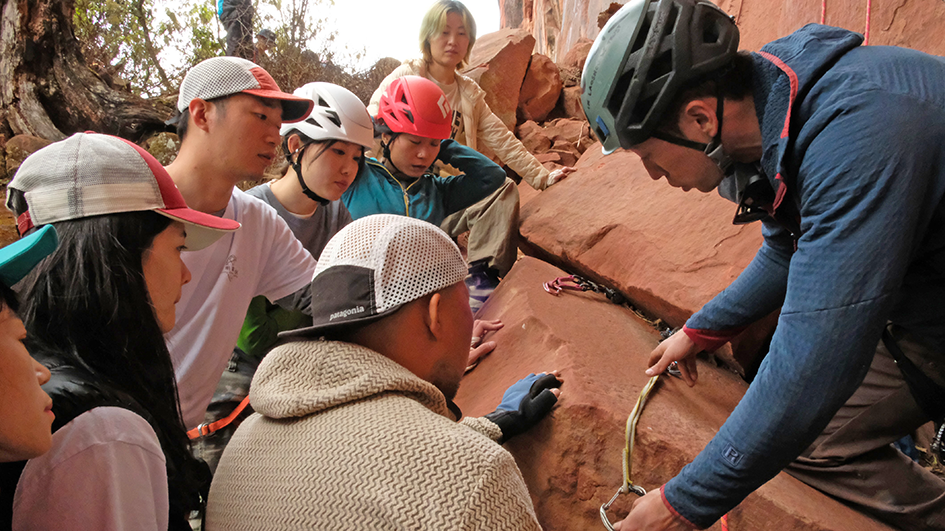
a trad anchor skills clinic I ran with the Liming Climbing Community and Patagonia (China) in the spring of 2024.
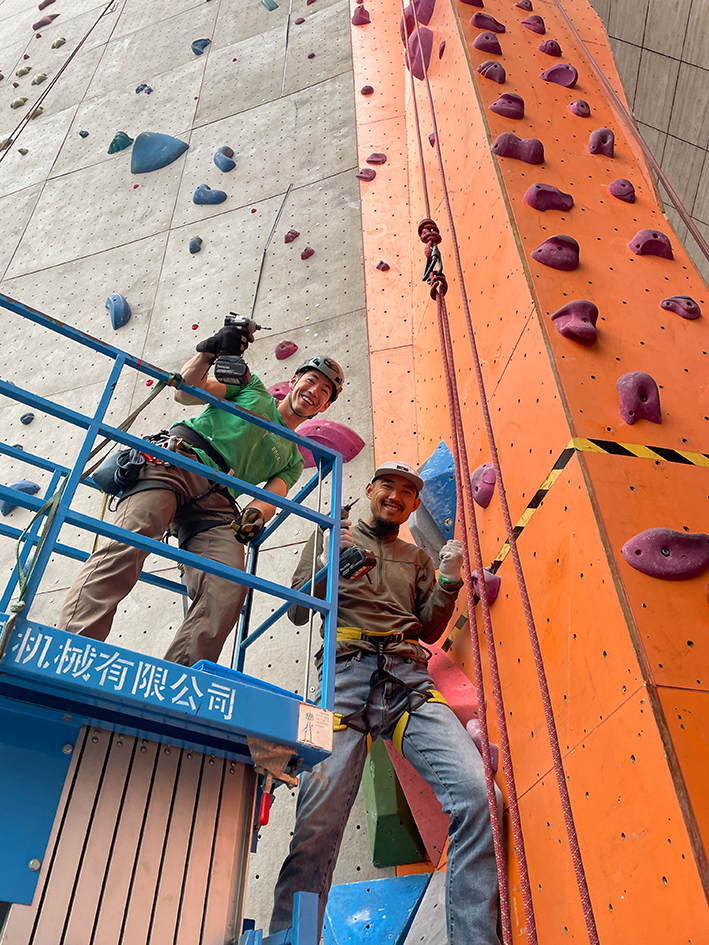
Chaozai and I setting up some crack routes at a climbing wall in Chengdu during the winter of 2023.
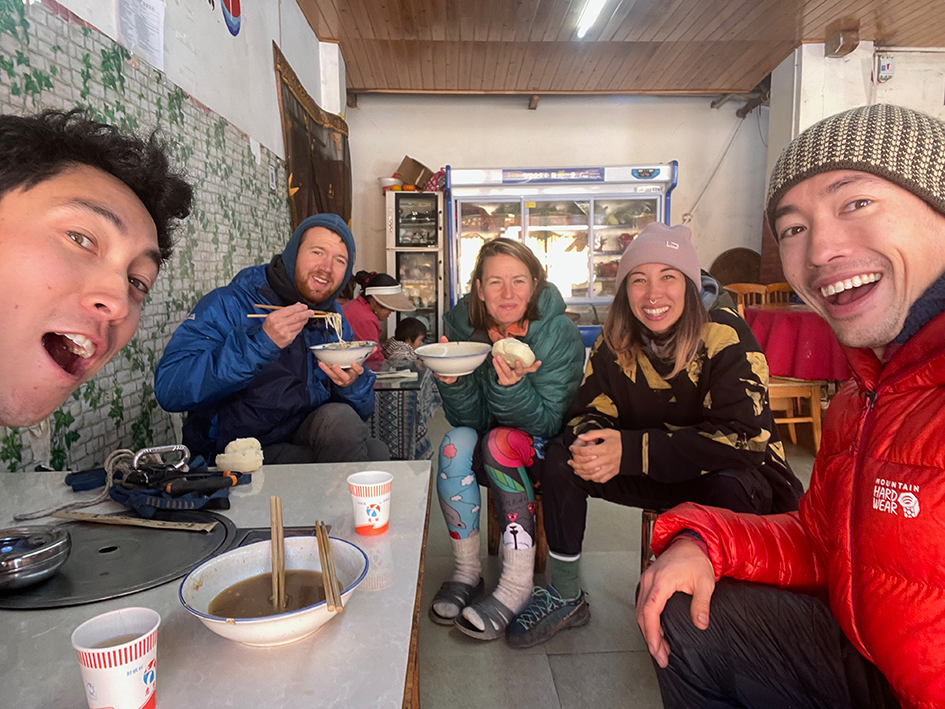
The international community began trickling back into Liming adter the pandemic in 2023.
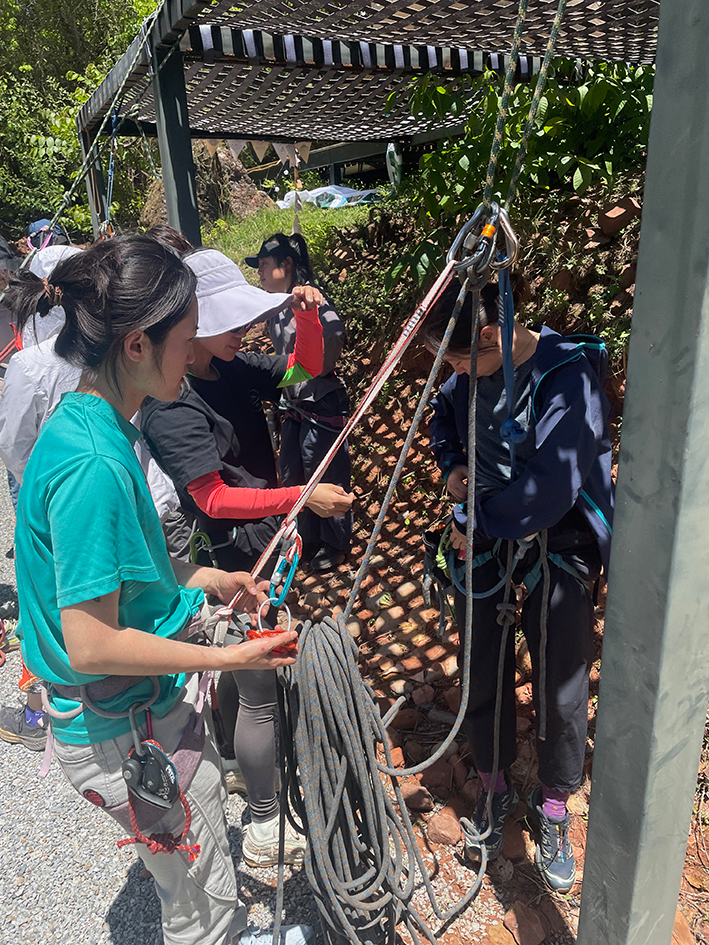
A self-rescue class I put on for volunteers at the climbing event hosted by the Liming Climbing Community and Patagonia (China) in spring 2024.
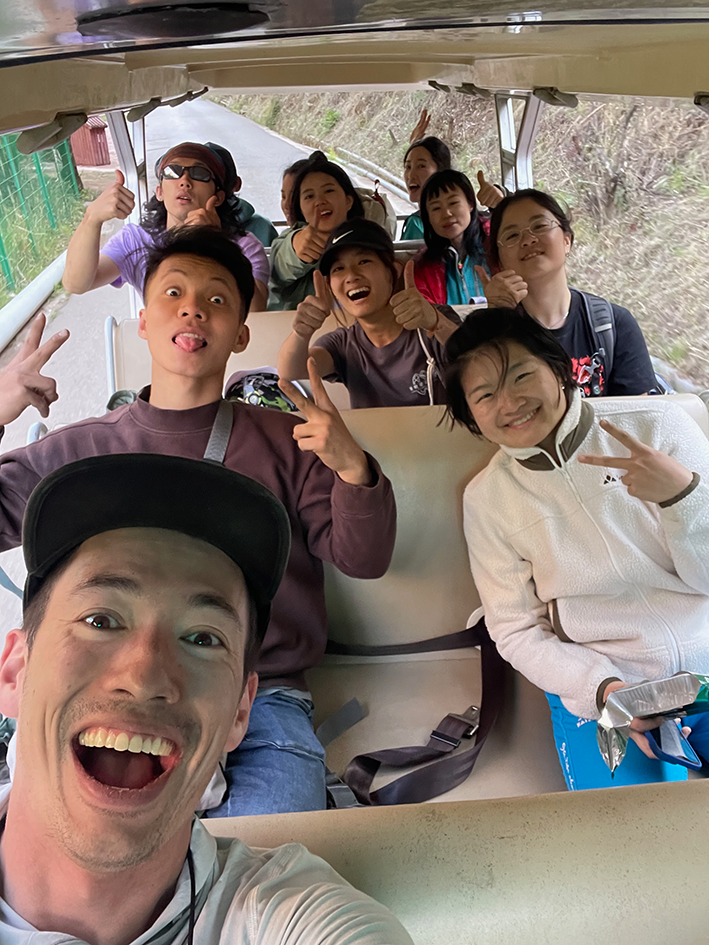
The next generation is psyched! It felt full-circle for me to mentor new climbers in the way the OG generation of Liming climbers mentored me!
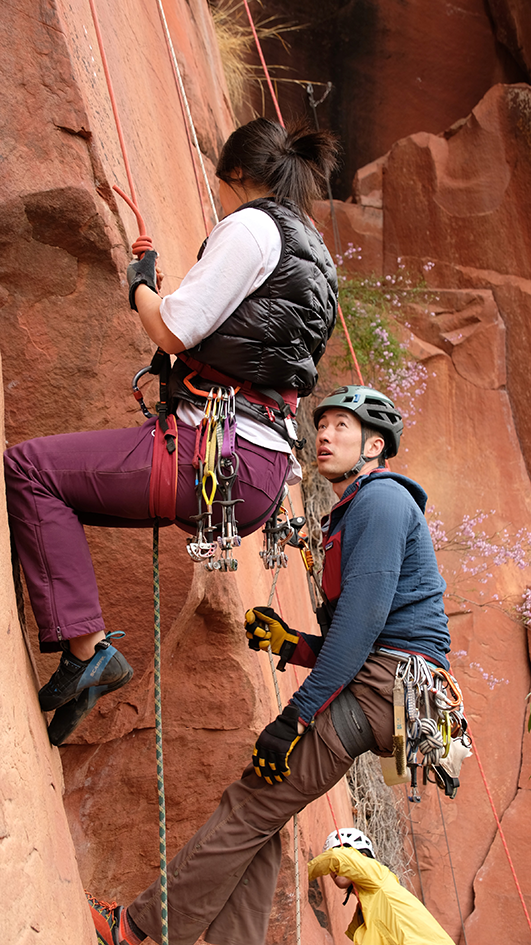
Doing some gear placement critiques during a community event back. inspring 2024.
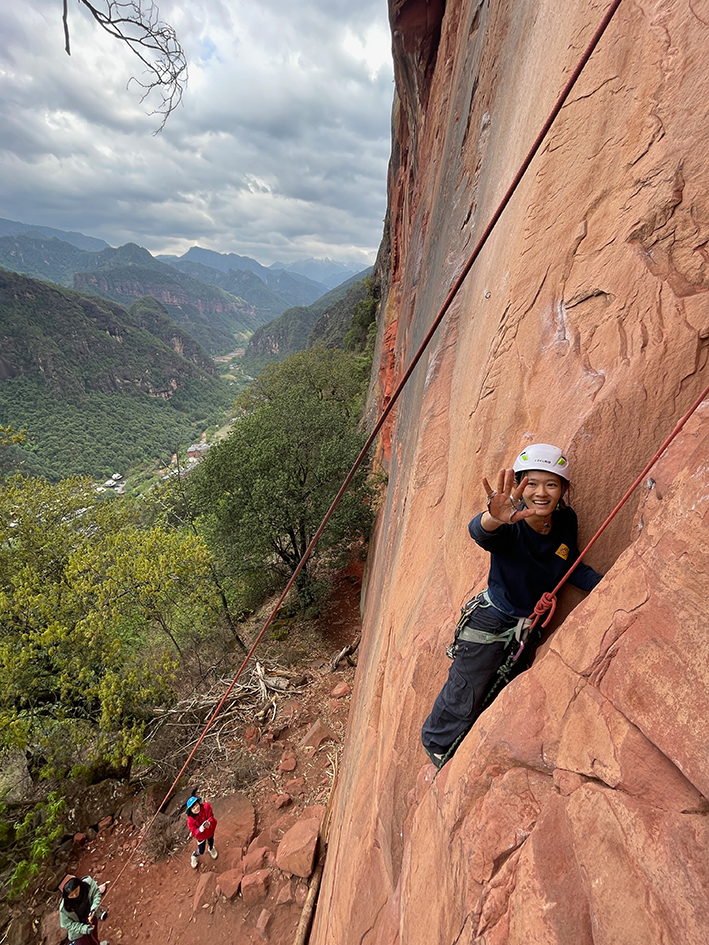
Climbers psyched to get mock lead laps in! A lot of leaerning styles in China focus on listening to teachers talk at students, so i made it my task to let the students have as much hands-on time with the tools of the trade as. I could.
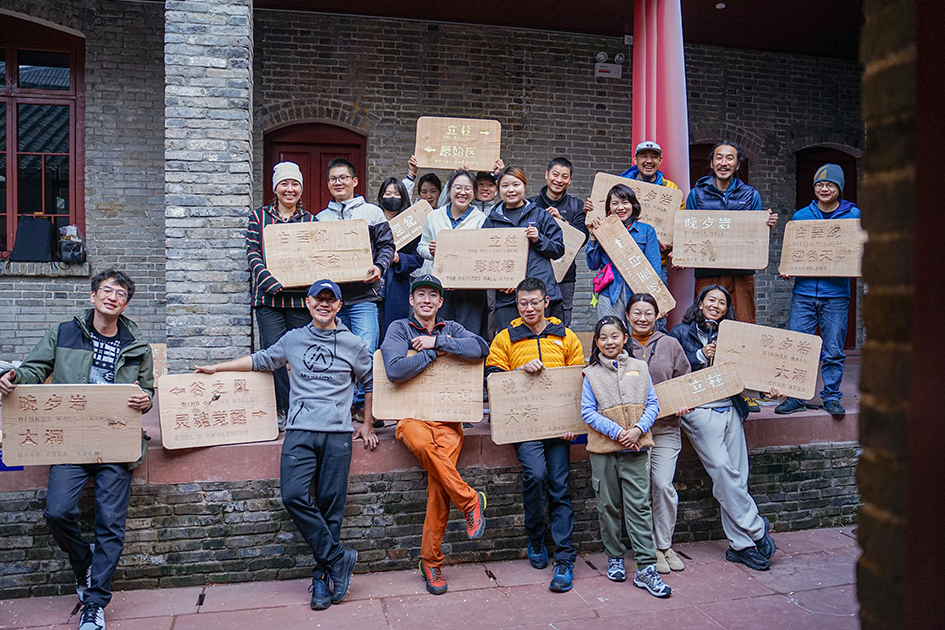
A sign building event in Chengdu hosted by the Liming Climbing Community and Patagonia (China). These signs were meant to be a step towards a more regular schedule of community-oriented developments that would help Liming village benefit from climbers' presence.
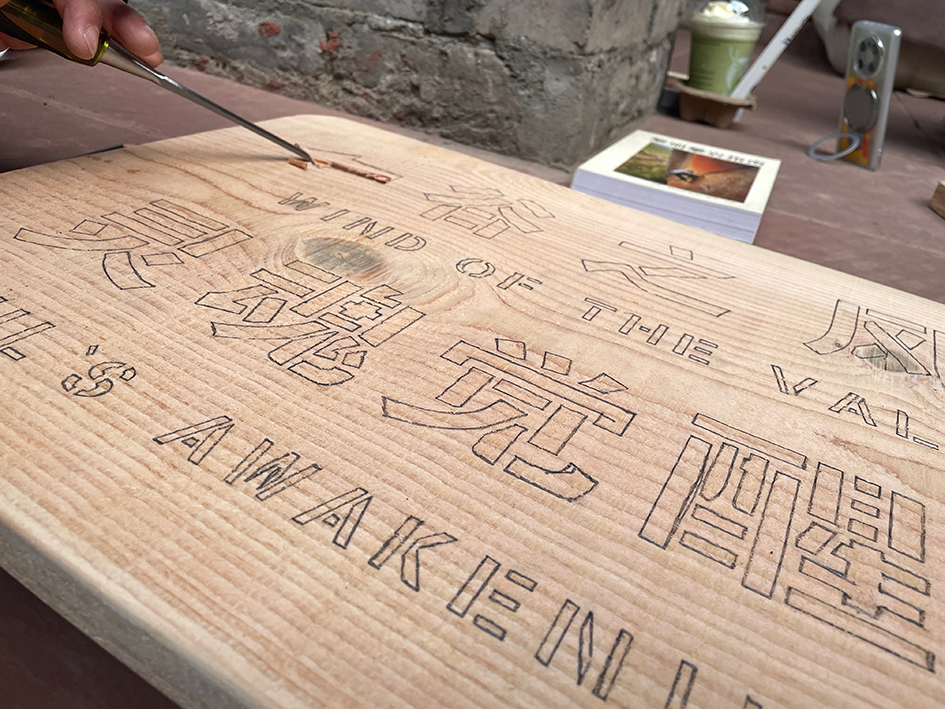
The signs were a long time in coming. I actually ended up doing a bunch of the designs and typography that ended up being used.
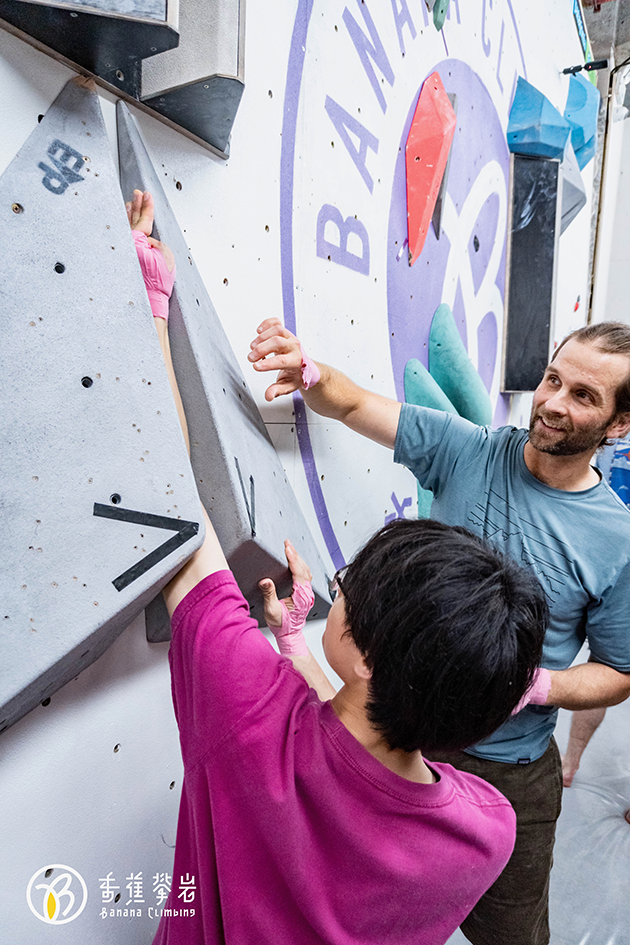
Full-circle. Mike Dobie got to speak and teach crack climbing skills to a broader Chinese audience during a circuit of community events hosted between the Liming Climbing Community and climbing gyms across China.
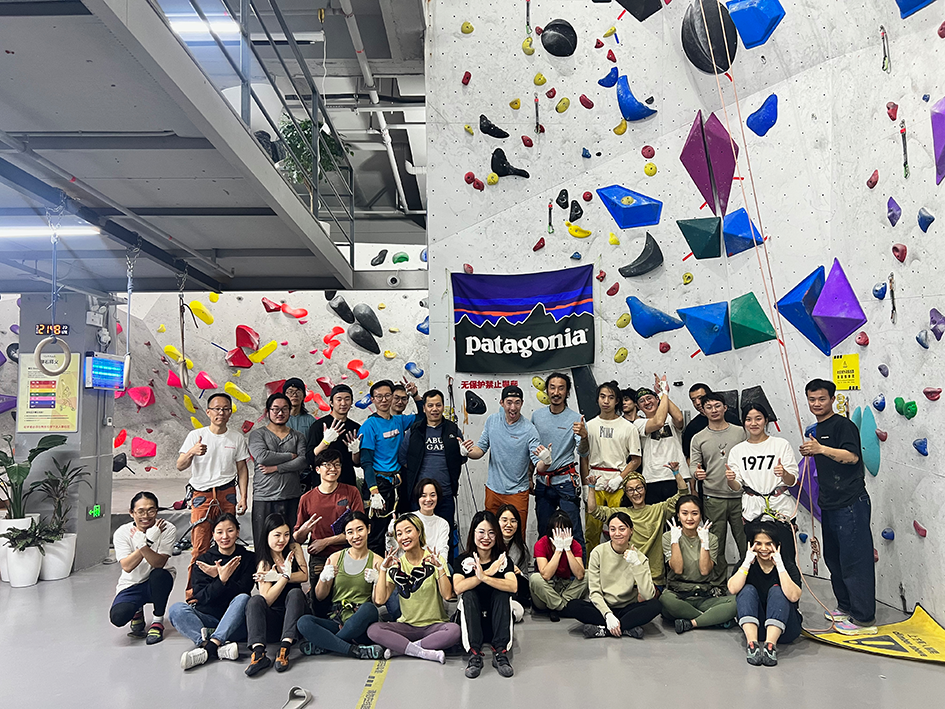
A learn to crack climb event hosted by the Liming Climbing Community and Climbism Gym in Shanghai back in the winter of 2023.
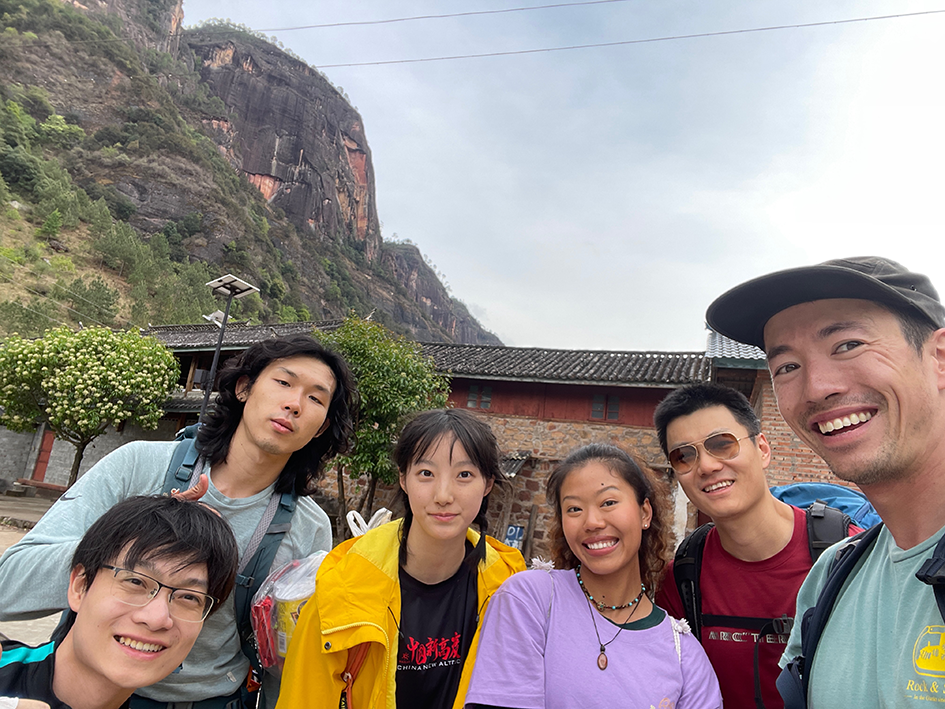
The next generation of Liming climbers smiling after a long day of learning new skills!